- Welcome!
- About the Collections
- Using the Collections
- Historical Research Guide
- Historical Vault Request
- Visitor Information
- Collections Corner!
Please Note: The Historical Reading Room will be closed for general study from December 15, 2025 to January 20, 2026. Researchers interested in reading from the historical collections can email the Historical Services team for appointments in January 2026.
Contact

Hannah Rose Swan
History of Health Sciences Librarian
eblinghistorical@hsl.wisc.edu
(608) 263-5405
READING ROOM HOURS:
MondayBy appointment only
TuesdayBy appointment only
WednesdayBy appointment only
ThursdayBy appointment only
FridayBy appointment only
LOCATION
3rd floor of the Ebling Library
Health Sciences Learning Center
750 Highland Avenue
Madison, Wisconsin 53705
Welcome to the Historical Collections at Ebling Library!
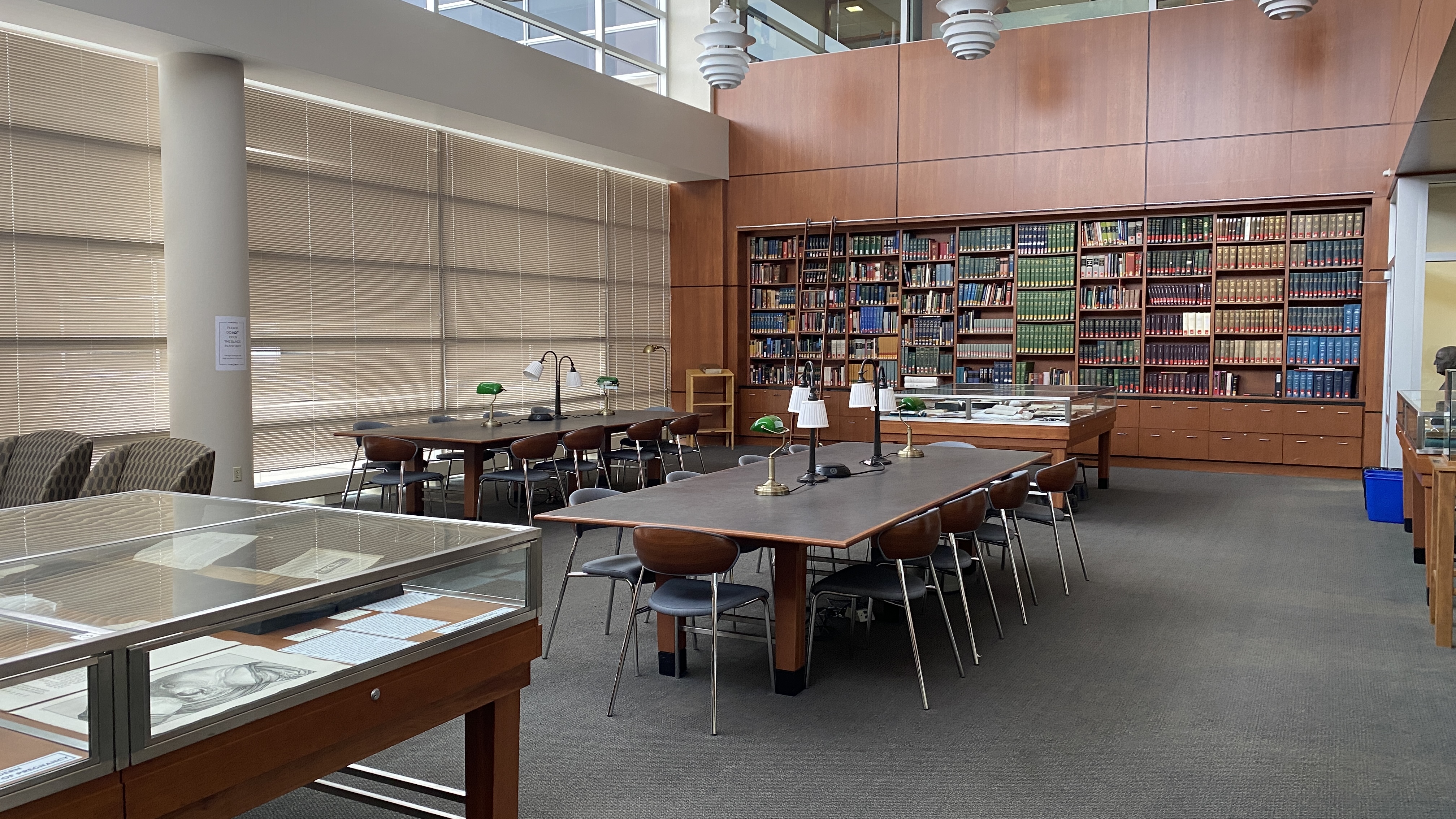
Ebling Library holds an extensive collection of rare books, ephemera, manuscript materials, and artifacts documenting the history of the health sciences from the late fifteenth through the early twentieth century. Many of the items are nationally or globally unique, making the Ebling Historical Collections an invaluable resource for researchers in the history of medicine.
Use the tabs above to learn about the collections, how to access them, and details on visiting the library, or to submit a request to view materials. You can also visit the Art@Ebling page to learn about current exhibitions on view in the Historical Reading Room.
About the Collections
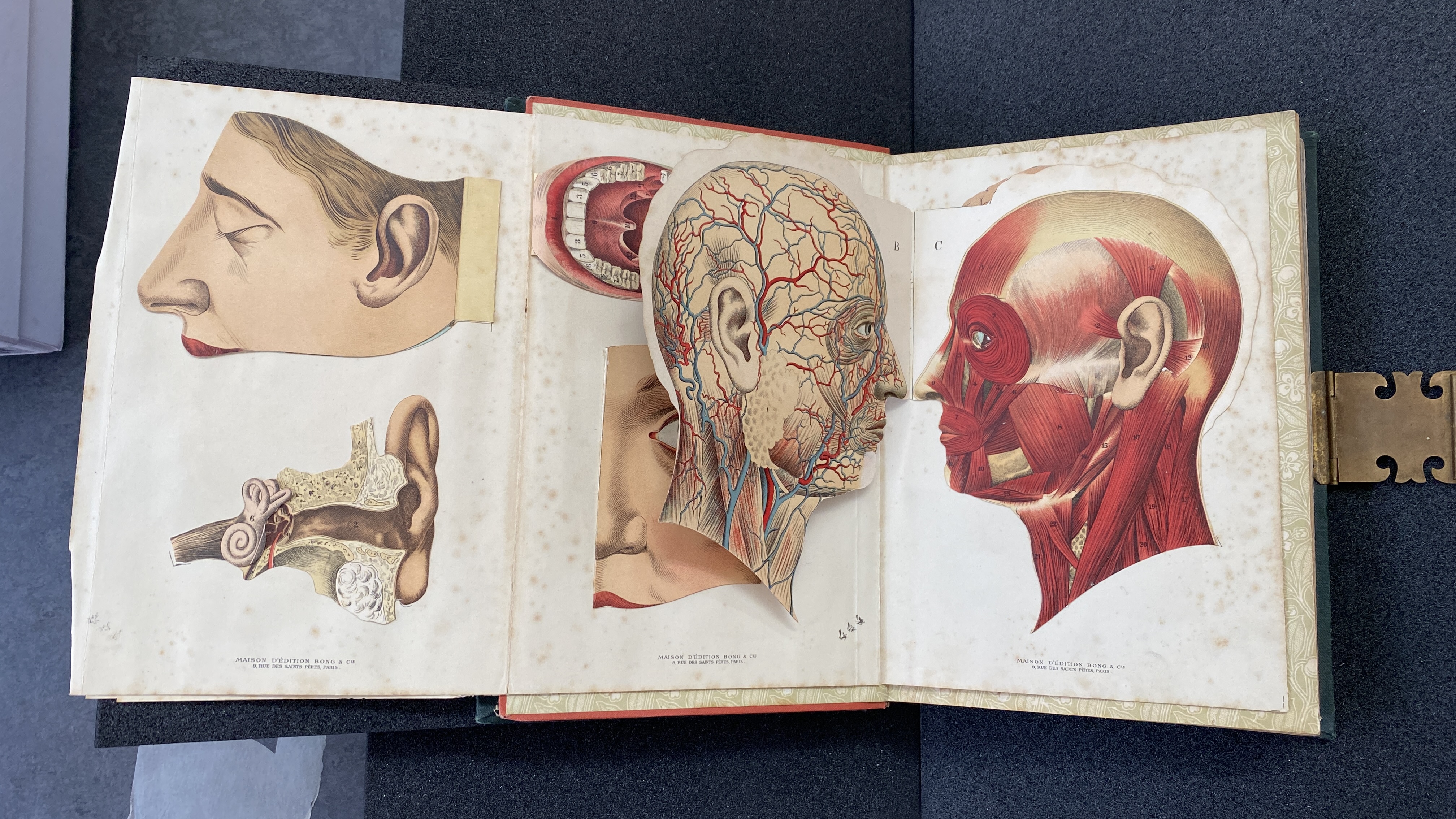
Ebling Library holds one of the preeminent collections of rare and antiquarian health sciences books in the country. Ranging in date from the late fifteenth century to the early twentieth century, the collection encompasses the development of western medicine and related disciplines as recorded in books, journals, and pamphlets.
Titles in the collection can be found by searching the Library Catalog where their location is identified as "Ebling Library Historical Vault". Guidelines for access to these materials can be found on the Using the Collections page.
Materials listed as "AIHP Kremers Reference Files" are not held at Ebling Library. To access these materials, please contact the American Institute of the History of Pharmacy at research@aihp.org.
Rare books in the Historical Collections have been acquired over time in large part due to generous donations from benefactors. Their contributions continue to represent some of the best items in the collection, and they illuminate general subject strengths, such as anatomy and vaccination, which we continue to collect. The collections have also grown through the timely purchase of major groups of materials, made possible by further donations and skillful pursuit by former health sciences librarians, like Helen Crawford. For a look at a few of these collections and the stories behind them, choose from the links below:
Please Note: The Historical Reading Room will be closed for general study from December 15, 2025 to January 20, 2026. Researchers interested in reading from the historical collections can email the Historical Services team for appointments in January 2026.
Using the Collections
The Historical Reading Room is open to all patrons of Ebling Library and to researchers working in the Library's historical collections.
Reading room hours are dependent upon staffing availability. If you would like to research from the historical collections, we strongly recommend making an appointment by emailing the Historical Services team.
If you are in need of an item listed in the Library Catalog that indicates “Ebling Library Historical Vault” please complete our online form. The item will be retrieved for you to consult in the Historical Reading Room.
Use Policies
Historical Services provides access to rare books and documents that are often fragile and in need of special handling to ensure their preservation. All patrons are required to sign a Handling and Use Policy to use the Reading Room, including those not consulting historical materials. Signing the policy indicates an acknowledgment of the following guidelines:
- All external visitors must check in at Health Sciences Learning Center Room 3310 before entering the Historical Reading Room.
- There is to be no food around collection materials, including gum and cough drops.
- There are to be no drinks (including water) around collection materials.
- Pens are not to be used around collection materials.
- Bags, coats, and heavy jackets are not allowed in the Historical Reading Room or other secure collections areas.
- Patrons must wash hands before handling materials.
- Flash photography is not permitted anywhere in the collections.
- All electronic devices must be silenced when in the Historical Reading Room.
- Nitrile gloves must be used when handling photographic, vellum, or metal materials, or as directed by a staff member.
- All bound materials must be consulted in cradles, regardless of age or condition.
- Some materials may be unavailable for consultation due to restrictions related to content or condition of items.
- Materials may not be transferred from one researcher to another without consent of Ebling staff member.
- Manuscripts must be maintained by the reader in the order in which they are received. If errors of arrangement or identification are noted, please inform an Ebling staff member.
Historical Research Guide
Please note that the History of Health Sciences Research Guide is currently undergoing maintenance and is not available.
For research assistance, please email the Historical Services team.
The Research Guide for the History of the Health Sciences can get you started with various primary and database resources. Please contact Hannah Swan for further assistance.
The easiest way to locate historical materials held by Ebling is to search in the UW-Madison Library Catalog for your preferred search terms, then to filter by library and sort by date. Most materials dating to 1923 and earlier will be held in the Vault.
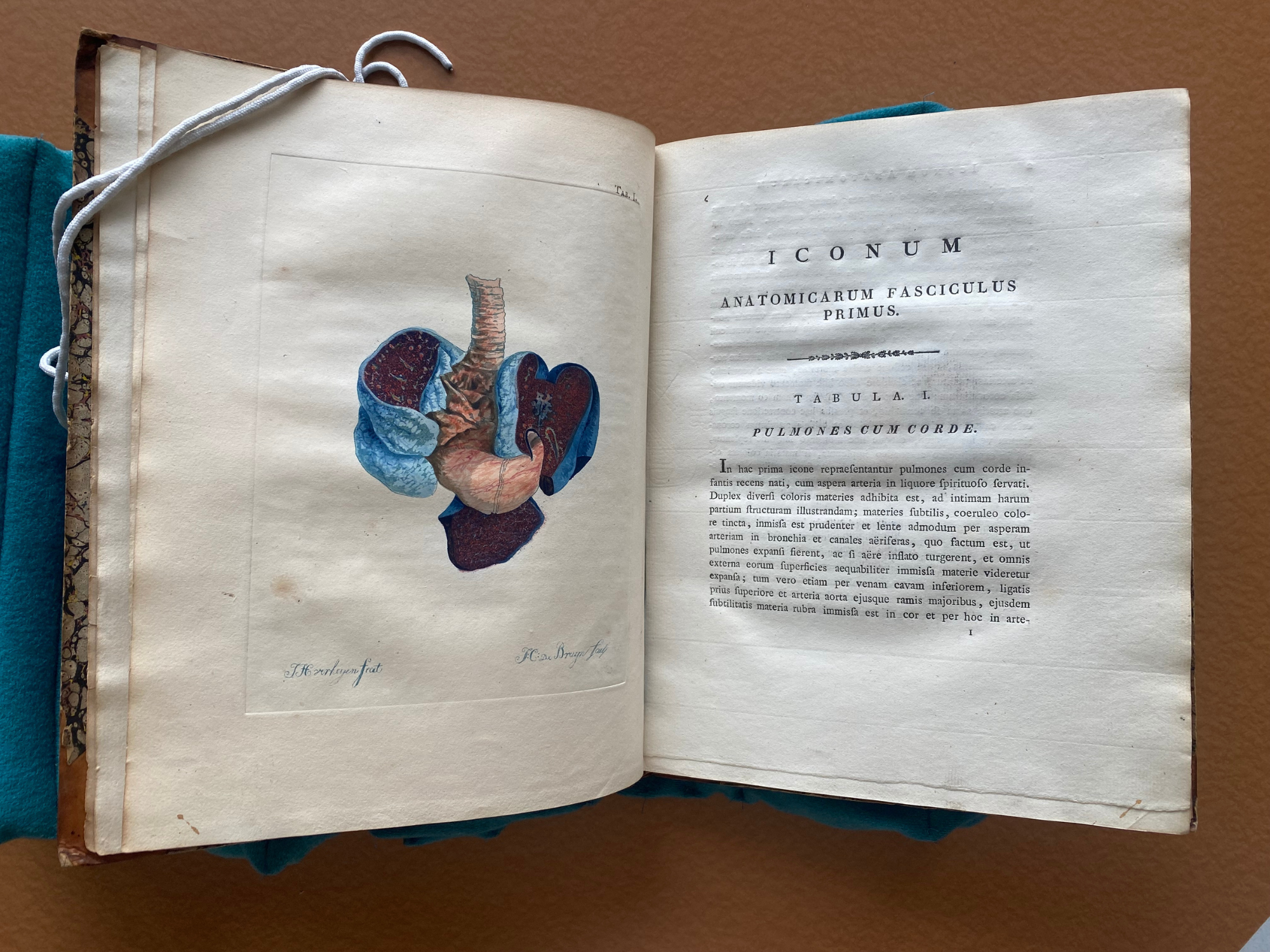
Jan Bleuland, Icones anatomico-physiologicae partium corporis humani et animalium... (1826).
Historical Materials Request Form
Please use this form to request materials listed as "Ebling Library Historical Vault" in the Library Catalog. You may add a preferred date to visit the Reading Room to consult the materials or indicate whether you are looking for reproduction services. Please note that reproduction orders are subject to item condition and staff availability.
Visitor Information
The Historical Collections are available for consultation by appointment. To make an appointment to view materials from the Vault, please email the Historical Services Team or submit a Vault Request form.
Getting to the Library
The Historical Reading Room is located on the south side of Ebling Library's third floor. All visitors must check in with the attending librarian in Room 3310 before using collection items. Storage is provided for bags, coats, drinks, and other materials not permitted in the Reading Room.
Visitor parking is available in Lot 75 and Lot 76. Visitor parking rates can be found on the University of Wisconsin's Transportation website.
Several bus routes run regularly to the Health Sciences Learning Center, including the 28, 38, 65, C, and J lines, as well as the free campus bus lines 80 and 84.
Those patrons joining us by bike will find ample bike parking on the north and east sides of the building, as well as parking for B-Cycle shared e-bikes across the street at the School of Nursing.

Welcome to Collections Corner!
Collections Corner is a new column published in tandem with the Ebling Post Newsletter. Each piece will dive into particularly unique, mysterious, and bizarre histories, printing techniques, and provenance from our historical collections, as well as give updates into the goings on behind the scenes at Ebling's Historical Services Department.
Fall 2025
Howdy, and welcome to Collections Corner! My name is Hannah Swan, and I am the Curator and History of Health Sciences Librarian at Ebling Library. I oversee all the Historical Services and Collections, including our extensive collection of rare books, manuscripts, artifacts, and ephemera. In this new Ebling Post column, I will be highlighting special, unique, and bizarre collection items that make ours one of the most important medical history collections in the country!
This issue, I will introduce myself, then crunch some numbers, highlighting a recent statistical analysis I have been working with Ebling’s Head of Resource Management and Collections Services, Andrew Osmond, to quantify what makes Ebling’s Historical Collections unique. Finally, I will show off a recent acquisition that uses a surprising printing technique to achieve its unique, colorful look.

Getting to Know the Curator
I arrived at Ebling in May from my position as the Archivist for the UW-Madison School of Pharmacy, where I spent two and a half years working to process, digitize, and exhibit the collections of the Edward Kremers Research Library and Archive. Prior to arriving in Madison, I worked as a Reference Librarian at the Public Library of Brookline and the Phillips Library of the Peabody Essex Museum, both in Massachusetts.
I am not a native Midwesterner, having spent my formative years in Seattle, Washington. (Yes, I am still adjusting to the winters…) I’ve also lived all over the world, including stints in France, Madagascar, Tajikistan, Kazakhstan, and the U.K., where I completed postgraduate degrees in Book History and Material Culture at the University of Edinburgh and Archives and Records Management at University College London.
Ebling’s Historical Collections by the Numbers
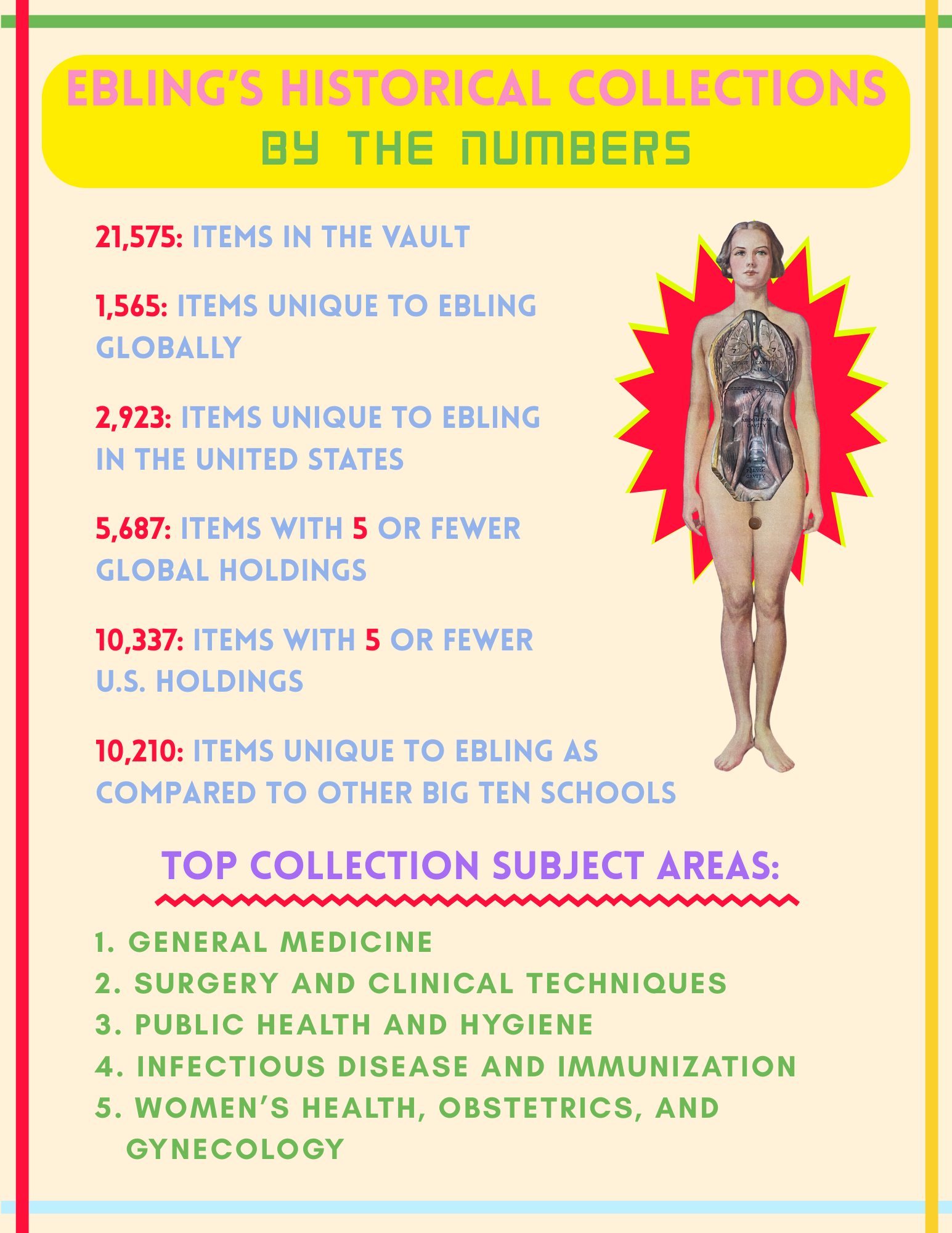
I have been working with Ebling’s Head of Resource Management and Collections Services, Andrew Osmond, on a project to quantify what makes Ebling’s collections so special. By running statistical analyses on the collection, we have been able to assess both its rarity and its strengths. The graphic [below] shows the results of these analyses. Of particular note is that about half of the items held in our Historical Collections “Vault” are unique within the United States. That makes us an important destination for medical history researchers!
Take a Look, It’s a NEW BOOK: New Donations & Acquisitions
Since beginning my tenure as Curator, I have made some exciting acquisitions to continue to strengthen the holdings of the Historical Collections. These include items I have purchased from dealers (and at the Friends of the UW Libraries Sale!), as well as items generously donated by our community. Today, I will be featuring Ballière’s Synthetic Anatomy, which was the first item I acquired in my new position!
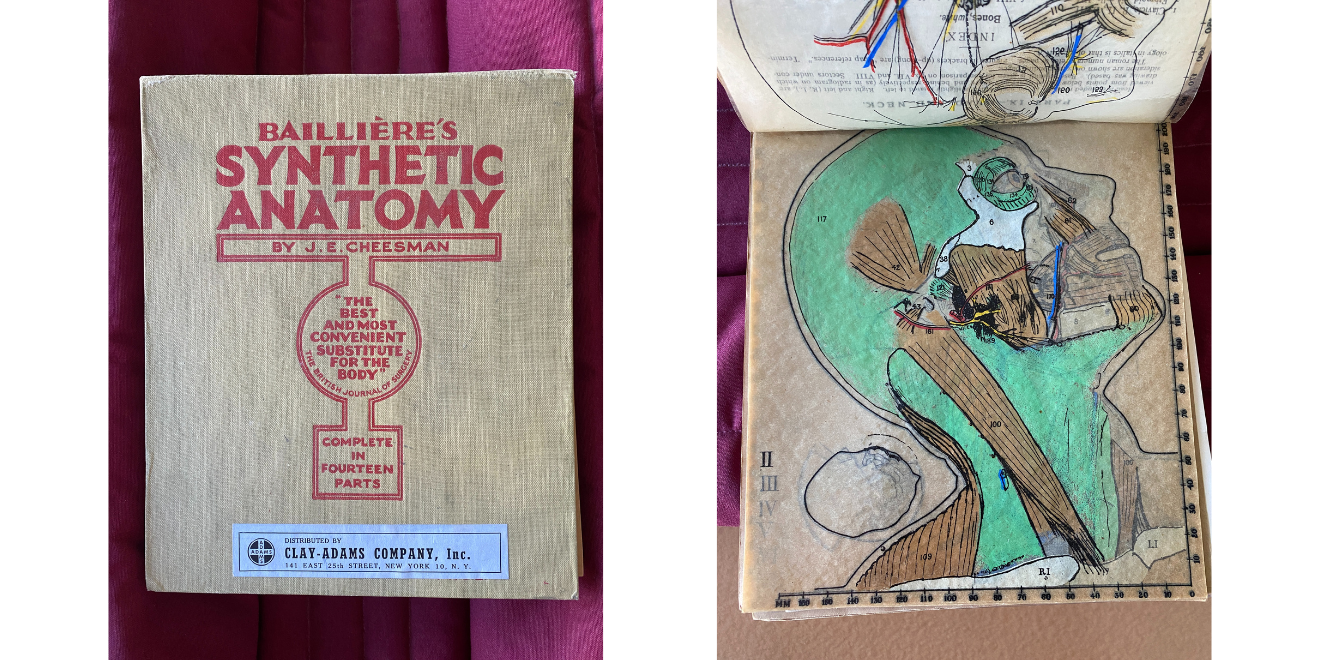
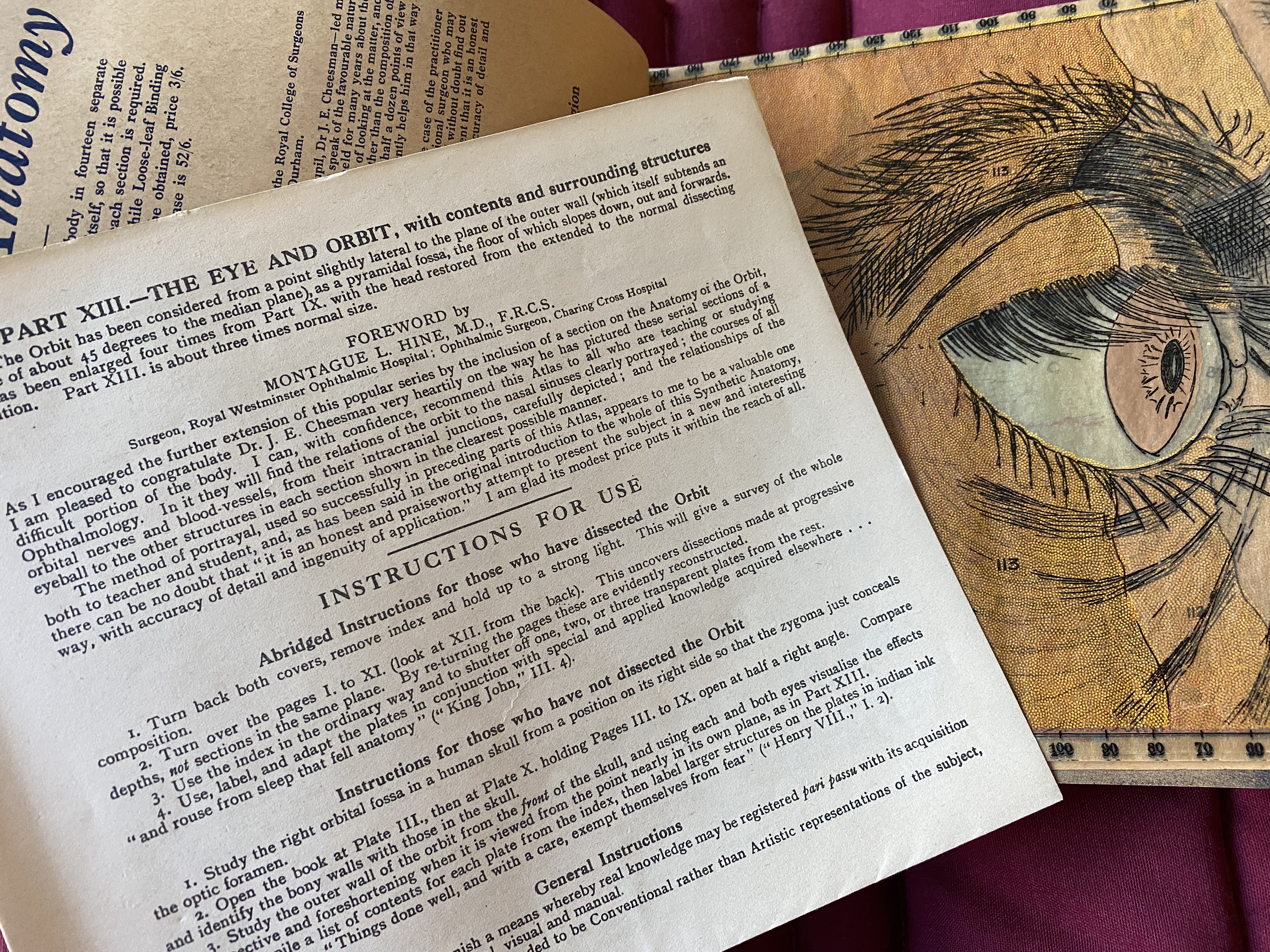
Ballière’s Synthetic Anatomy by J. E. Cheesman joins a significant number of medical teaching aids in the Ebling Historical Collections. Published between 1927 and the late 1930s, the book consists of a folder of fourteen fascicles (separate parts of a book, published in installments), each of which features a different part of the body (head, eyeball, foot, etc.) Each fascicle contains leaves of glassine paper printed with layers of the body part. As you flip through them, the structure mimics a dissection, revealing deeper and deeper anatomical strata. In fact, the accompanying instructions actually explicitly frame the reading of the text as a substitution for dissection: instructions are given in two parts, “for those who haven’t dissected” the given organ or limb, and for those who have.
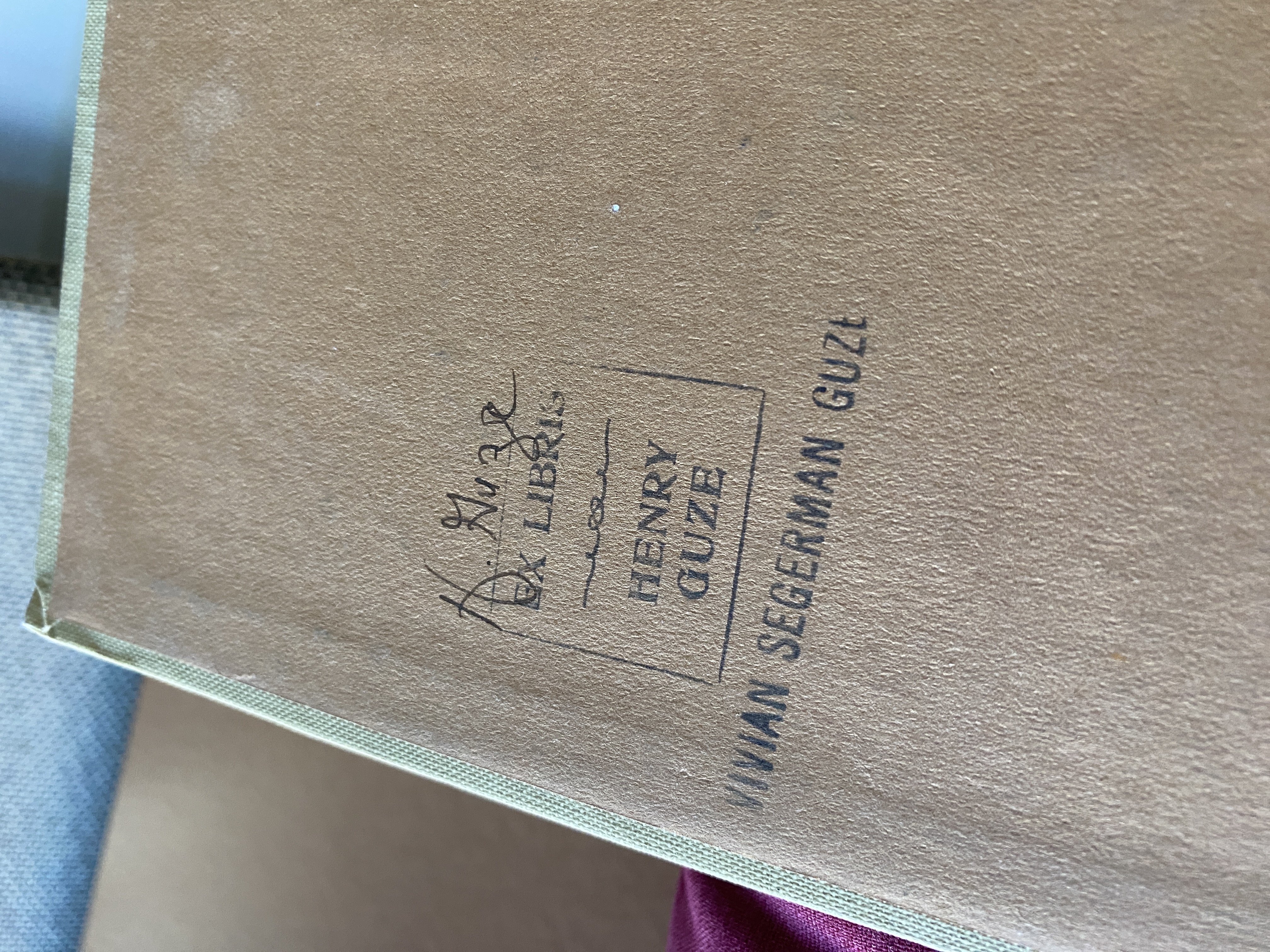
Though single fascicles of Synthetic Anatomy are relatively common in historical medical collections, the full set of fascicles in its original binder is rare, especially in such good condition. Our copy is also notable for its provenance. Inside the front cover of the binder is an ex libris ink stamp from Henry Guze and Vivian Segerman Guze, a married couple, both psychologists. Henry was a founder of the American Association of Psychotherapists, the Society for Clinical and Experimental Hypnosis, and the Society for the Scientific Study of Sex. His wife, Vivian, was also an accomplished psychologist and bibliophile, whose passion lives on in an endowed fund for the Yiddish Book Center in Amherst, Massachusetts. It is likely because of this private ownership that the book was maintained in such good condition, whereas the fragile glassine pages of copies used for anatomical instruction by hundreds of students are often torn or removed.
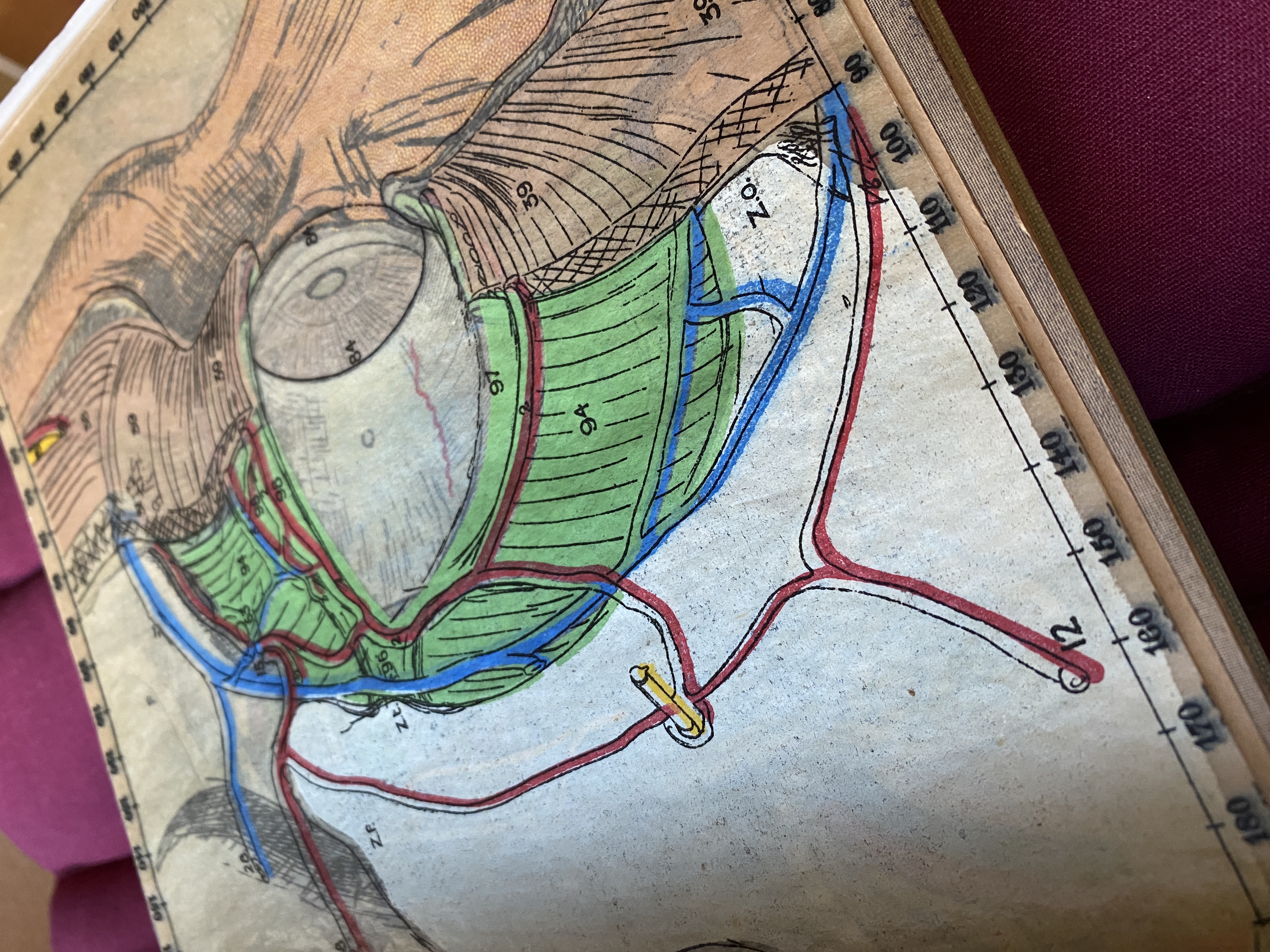
The work is also notable for its unusual printing style. Though we can’t say definitively, it seems that the leaves of Synthetic Anatomy were printed using what’s known as a “pochoir” printing technique. “Pochoir” is taken from the French word for stencil, which is how pochoir prints are made. A stencil, usually made of metal, is cut for each color, which is then placed on the page and pigment applied by hand. Pochoir printing experienced a revitalization in the 1920s and 1930s, particularly in fashion illustration.
In looking at the veins in this leaf of the “Eye and Orbit” fascicle, you can see how, although perfectly shaped and sized, the color for the veins is slightly off from the black detail work, to me indicating the use of stenciled printing. The color is applied to the verso (or back) of the leaf, and it is slightly raised to the touch, further indicating the application of gouache or a similar pigment within a stencil.